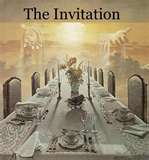
And the Spirit & the bride say, come.... Reveaaltion 22:17

And the Spirit & the bride say, come.... Reveaaltion 22:17
And the Spirit & the bride say, come...Revelation 22:17 - May We One Day Bow Down In The DUST At HIS FEET ...... {click on blog TITLE at top to refresh page}---QUESTION: ...when the Son of man cometh, shall he find faith on the earth? LUKE 18:8

Tuesday, December 10, 2024

Scripture Interprets Scripture SERIES: CASE STUDY #3


"Example 3: 2 Peter 3:8 (God’s Patience)

PASSAGE:But do not overlook this one fact, beloved, that with the Lord one day is as a thousand years, and a thousand years as one day.

Q: Does this mean that in Biblical usage a day can represent thousands or millions of years?

SURROUNDING TEXT: Immediately leading up to the passage, Peter speaks of people who follow their own sinful desires and says they “deliberately overlook” both creation and the flood. 
Peter points out that the world was made “by the word of God” and that “by the same word” the world is destined for fiery judgment when God will destroy those who do not give Him due reverence. Right after the passage, Peter shifts to explaining why God has not yet brought judgment on evil, citing God’s patience toward people, “Not wishing that any should perish, but that all should reach repentance.” 

SAME BOOK: Peter clearly took the miraculous events in the Old Testament as literal history, as his Lord and Savior did. 
In chapter 2, he speaks of Noah and the worldwide flood, the destruction of Sodom and Gomorrah, and Balaam’s donkey who spoke with a human voice. 
Peter also speaks plainly about the nature of sin. Chapter 1 talks of escaping the corruption in the world caused by sinful desire, and chapter 2 points out that this corruption enslaves those overcome by it, even as they claim it as freedom instead.

SAME WRITER: In his first letter, Peter takes Old Testament history literally, calling God “a faithful Creator” and referring to God’s patience in the days of Noah, when only eight people were protected from the flood (1 Peter 4:19, 3:20). He also pointed out God’s intolerance toward unrepentant sinners but loving care toward those who have been made righteous through Christ, quoting from Psalm 34 (1 Peter 3:11–12): “Let him turn away from evil and do good; let him seek peace and pursue it. For the eyes of the Lord are on the righteous, and His ears are open to their prayer. But the face of the Lord is against those who do evil.

SAME TESTAMENT: In the interim of human history while God is exercising patience toward those He has called to come to Him, Jesus used a parable of a wedding invitation (Matthew 22:1–14). Those invited responded in different ways. 
---The first group described refused the invitation (verses 3–7). 
---The second group (verses 8–13) were guests who had accepted the invitation, but not all arrived in the manner required by the host. 
---The difference between the accepted and rejected guests was their attire, and Genesis 3:7, 21 provides insight into the distinguishing factor. 
---After they sinned, Adam and Eve tried to cover their nakedness with fig leaves, but this was inadequate. Only the covering provided by God was sufficient, and it required the shedding of blood to cover them with animal skins instead.
---Our response to God’s invitation requires that we come to him according to his requirements and provision

A Thousand Years
ENTIRE BIBLE: If Peter employed the term “a thousand” as a general way to describe a large amount of something, it would fit alongside many other scriptures where it was used in the same way (Deuteronomy 1:11, 7:9, 32:30; Joshua 23:10; 1 Chronicles 16:15; Job 9:3; Psalm 50:10, 84:10, 90:4, 91:7, 105:8; Ecclesiastes 6:6; Isaiah 7:23, 30:17). 
Psalm 90:4 specifically uses it with years, stating, “For a thousand years in your sight are but as yesterday when it is past, or as a watch in the night.” Clearly, a thousand years is not used to suggest a day could represent a long period of time because it would also have to apply to a three-hour watch in the night. 
Additionally, Ecclesiastes 6:6 uses “a thousand years twice over” to paint a picture of an extraordinarily long lifetime, one twice as long as the oldest person listed in the Bible, Methuselah, who reached 969 years of age and other patriarchs like Adam (930 years, Genesis 5:5) and Noah (950 years, Genesis 9:29).

Peter’s simile comparing a day to a thousand years and, going the other direction, a thousand years to a day is just a manner of recognizing that humans experience time in a way that feels incredibly long, especially when we are waiting. 
*Our eternal God, however, exists outside the boundaries of time; He always was, is, and will be, and he does not view time in the same way that we do.

So going back to the original passage and question: Does this mean that in Biblical usage a day can represent thousands or millions of years? 
A: No. Peter reminds us that as we wait for all to be set right, God is being patient toward people who have yet to come to Him. 
---All have received an invitation; each must decide how to respond." 
AIG

Health Note - Alcohol & your Brain

Beloved, 
I wish above all things that thou mayest...be in health,.. 
3 John 1:2

"Alcohol is by definition a biochemical toxin since consumption of alcohol causes tissue damage, inhibits normal bodily functions and promotes cellular dysfunction. 
While the body is built to proactively protect itself from invaders and filter out toxins, alcohol crosses through what’s known as the blood-brain barrier
Once inside, alcohol disrupts your brain's neurotransmitters needed for normal function. 
Specifically, the result of alcohol's interaction is to sedate certain parts of your brain and suppress its normal activity. 
Evidence suggests that long-term exposure to alcohol can permanently alter your brain's signaling chemistry, and this is what is suspected to play a role in the development of dementia.
When alcohol is consumed in excess it can lead to inflammation of the brain, called neuroinflammation
In fact, emerging research shows the inflammation caused by excessive alcohol consumption may contribute to gut dysbiosis, or an imbalance of the bacteria living in your microbiome."
ElizabethShaw

Creation Moment 12/11/2024 - The Darwin Letters

"Karl Marx (1818–1883), the founder of communism, called religion (meaning Christianity) “the opium of the people”. He was enthusiastic that Darwin’s evolutionary theory (Origin of Species, 1859) provided a completely materialistic explanation of living things. Marx even sent a copy of Volume 1 of his book Das Kapital 2 (published in German in 1867) to Darwin with the handwritten inscription:

"Mr Charles Darwin On the part of his sincere admirer Karl Marx London 16 June 1873 Modena Villas Maitland."

Darwin is unlikely to have read it, however. Apart from being in German, only the first 100 pages had been ‘opened’.

Letter 1—the Marx-dedication myth
It has long been thought that at a later date, Marx wrote to Darwin offering to dedicate one of the later volumes of his book to him. This is because a letter from Darwin, dated 14 October 1880, was found in Marx’s archives, and in it Darwin declines the offer of a book dedication.
--However, Darwin’s letter doesn’t mention either Marx or the book’s title, and no letter from Marx offering this has ever been found. Also, in declining, Darwin stated that he believed that:
"direct arguments against christianity & theism produce hardly any effect on the public; & freedom of thought is best promoted by the gradual illumination of men’s minds, which follows from the advance of science."
But if he had had Marx’s then-forthcoming book in mind, it had no such direct arguments.
It turns out that Darwin’s letter was very likely not written to Marx, but to Edward Aveling (1849–1898), a prominent English biology instructor and spokesman for evolution, atheism, and socialism. It could have readily become mixed up with Marx’s papers, since Aveling, who became the partner of Marx’s daughter Eleanor in 1884, was custodian of Marx’s archives.
A letter from Aveling to Darwin has been found, in which Aveling offers to dedicate his own forthcoming book The Student’s Darwin (Freethought Publishing, 1881) to Darwin. The book included arguments against Christianity and theism.
Darwin’s motivation:
The wording of Darwin’s letter suggests that 
--he was not opposed to arguing against Christianity, 
--but to the tactic of confronting it directly. 
He would have been well aware that evolution is incompatible with the Genesis record. The idea of millions of years of suffering, disease, and death, long before people, denies the whole idea of a ‘very good’ (Genesis 1:31) world that was ruined through the sin of the first man. It thus logically undermines the basis of the Christian Gospel that the Lord Jesus Christ died for our sins on the Cross and rose from the grave.

Letter 2—Darwin makes it plain
Another letter from Darwin bluntly underscores his rejection of the Gospel and of ‘Christian evolution’. Less than two years before Darwin’s death, a young Christian barrister, Frederick McDermott, wrote to Darwin, asking him about his belief in the New Testament, as follows:
"If I am to have pleasure in reading your books I must feel that at the end I shall not have lost my faith in the New Testament. My reason in writing to you therefore is to ask you to give me a Yes or No to the question Do you believe in the New Testament. … but without that assurance I fear my brain is not fine enough to argue out doubts which might be suggested by your works, … but if I can say that the author of these doctrines believes as I do that Christ was the Son of God, I can say that it is only in matters of detail that Mr Darwin differs from Charles Kingsley [a clergyman and theistic evolutionist] and I may read with full pleasure of all the wonders of nature which he has collected.
Darwin’s reply was short and to the point:
"Dear Sir, I am sorry to have to inform you that I do not believe in the Bible as a divine revelation, & therefore not in Jesus Christ as the son of God.
Yours faithfully
Ch. Darwin."
This letter was kept confidential for over 100 years, and then on 21 September 2015 it was auctioned at Bonhams of New York for the astonishing sum of US $197,000." 
CMI

Monday, December 9, 2024

Scripture Interprets Scripture SERIES: CASE STUDY #2

 "Example 2: Romans 8:20–21 (God’s Promise)

PASSAGE:For the creation was subjected to futility, not willingly, but because of Him who subjected it, in hope that the creation itself will be set free from its bondage to corruption and obtain the freedom of the glory of the children of God.

Q: How can a good and sovereign God have futility, bondage, and corruption in His creation?

SURROUNDING TEXT: Romans 8:3 says that God sent His Son “in the likeness of sinful flesh” in order to condemn sin. 
Further back in the text, it says sin originated with Adam and brought death to the world, which spread to all people since all sinned (Romans 5:12–14). 
The single exception among humanity is Jesus Christ who, though He took on flesh (Romans 8:3; Colossians 1:22; 1 Timothy 3:16; Hebrews 2:14; 1 John 4:2) was without sin (2 Corinthians 5:21; Hebrews 4:15; 1 Peter 2:22; 1 John 3:5).

SAME BOOK: In writing Romans, Paul addresses each aspect of divine revelation
For general revelation, he describes creation as a witness to all people of God’s power and other attributes (Romans 1:1920) and identifies conscience as an indicator of God’s standard of right and wrong (Romans 2:1415).
Paul covers special revelation too. He mentions that the Law and the Prophets [the Jewish Scriptures, or Old Testament] bear witness to what God has accomplished in giving righteousness and redemption to those who put their faith in Jesus (Romans 3:21–26) and that the gospel was “promised beforehand through His prophets in the holy Scriptures” (Romans 1:2). Paul uses Scripture to explain God’s message to his readers, quoting it about 50 times throughout Romans, pulling from Genesis, Exodus, Leviticus, Deuteronomy, 1 Kings, Job, Psalms, Proverbs, Isaiah, Jeremiah, Ezekiel, Hosea, Joel, Habakkuk, and Malachi. 

Dealing with Sin and Death
Much of Romans focuses on the other aspect of special revelation, the person and work of Christ, as well as the work of God’s Spirit who dwells with those who have been adopted as God’s children. Romans 5:8–10 states, “God shows his love for us in that while we were still sinners, Christ died for us. Since, therefore, we have now been justified by His blood, much more shall we be saved by Him from the wrath of God. For if while we were enemies we were reconciled to God by the death of His Son, much more, now that we are reconciled, shall we be saved by His life.” 

SAME WRITER: Another one of Paul’s letters, 1 Corinthians, compares Adam and Christ as well as the role of Scripture in revealing God’s plan. 
Paul says that Jesus died for our sins, was buried, and raised on the third day “in accordance with the Scriptures,” a phrase repeated in each of the two verses (1 Corinthians 15:3–4). 
Then Paul compares Adam, the man of dust who brought death, with Christ, the man who makes alive all who belong to Him (1 Corinthians 15:21–22, 45–49). 
---Paul clearly sees death as an intrusion into God’s creation because he calls it “the last enemy to be destroyed” (1 Corinthians 15:26).

SAME TESTAMENT: Peter also understood that creation would be restored, based on the work of Christ, and he appealed to Scripture in speaking with his fellow Jews at the temple. In Acts 3:18–21, he said: “What God foretold by the mouth of all the prophets, that His Christ would suffer, He thus fulfilled. Repent therefore, and turn back, that your sins may be blotted out, that times of refreshing may come from the presence of the Lord, and that He may send the Christ appointed for you, Jesus, whom heaven must receive until the time for restoring all the things about which God spoke by the mouth of His holy prophets long ago.” 
He reminded his readers in 2 Peter 3:13 that “according to [God’s] promise we are waiting for new heavens and a new earth in which righteousness dwells.
John described this too. In Revelation, he saw a new heaven and earth, absent of suffering and death, where God’s adopted children have rest, and without anything accursed (Revelation 14:13, 21:1–7, 22:3).

ENTIRE BIBLE: The Bible often employs a symmetrical teaching structure. This is found in short passages, but it is also used for the entire span of God’s Word. 
In Genesis 1, God created a perfect world where people lived in harmony and relationship with Him. 
In Genesis 3, Adam and Eve made a conscious choice to rebel against God, dismissing His wishes to pursue their own, with the terrible consequence that all of God’s creation was subjected to suffering and death. 
At the end of time, however, God has promised to restore His adopted children and creation to its original state of perfection, as described in the final chapters of Revelation.

So going back to the original passage and question: How can a good and sovereign God have futility, bondage, and corruption in his creation? All that God created was originally without flaw and “very good,” but when humans chose to sin, it brought futility, bondage, corruption, and death into the entire world. 
In God’s sovereignty, His plan has always been to restore those He has adopted as His children, along with creation itself, to its original state of perfection in harmony with God’s perfect ways.
AIG

Cast abroad the rage of your wrath

"Self-defense has no place whatever in the kingdom of God.

Hast thou an arm like God? or canst thou thunder with a voice like Him? Deck thyself now with majesty and excellency; and array thyself with glory and beauty. Cast abroad the rage of thy wrath;" Job 40:9-11." 
E.J. Waggoner

Health Note - What Water Can Do For YOU

Beloved, 
I wish above all things that thou mayest...be in health,.. 
3 John 1:2

"Water is a major constituent of the human body and is considered an essential nutrient that cannot be sufficiently produced by metabolism.
The National Academy of Medicine suggests a daily fluid intake of approximately
13 eight-ounce cups for men and 9 for women,
respectively.

Drinking eight cups of water a day significantly decreased the likelihood of getting a kidney stone.
Several studies found that drinking about six cups of water a day helped adults lose weight.
Other studies indicated that water can help prevent migraines, control diabetes and lower blood pressure, and prevent urinary tract infections." 
SciNews

Creation Moment 12/10/2024 - Stable DESIGN

Through faith we understand that the worlds were framed by the word of God,... Hebrews 11:3

"Evidence throughout the galaxy points to other stellar systems (the planets orbiting other stars) being very chaotic. Those planets have highly elliptical orbits, and are generally much closer to the star than those in our own solar system, i.e. well inside the ‘Goldilocks zone’ where life is possible. 
Medium-sized planets are common in other systems, but there are no medium-sized planets in our solar system; instead, we have gas giants and ice giants on one hand, and small rocky planets like our Earth on the other. 

Using the Nice model, scientists previously found that the gas giants Jupiter and Saturn regulate the orbits of the small inner planets (Mercury, Venus, Earth, Mars), and have prevented them from becoming unstable and falling closer to the Sun.

Secular scientists believe that the structure and evolution of the solar system have been shaped by stellar flybys—the nearby passage of another star. Yet mathematical modelling by a team of scientists has suggested that one of these flybys could destabilize the whole system, as the perturbation to one outer planet would have a knock-on effect to all others. E.g., if Neptune’s semimajor axis were disturbed by only 0.1 %, then the probability of destabilizing the whole system would increase tenfold over 5 billion years (the naturalistic age assigned to the solar system). This is a major problem for naturalistic scenarios.

A further study has recently suggested that our solar system has built-in constraints on the degree of movement of inner planet orbits, preventing them from becoming increasingly chaotic and colliding. French mathematician Henri Poincaré (1854–1912) famously highlighted the impossibility of modelling accurately three or more moving bodies (the three-body problem), where predictability becomes increasingly difficult as time progresses. As such, small changes in the position of the inner planets would compound and destabilize their order in only 100 million years or so, which is about one fiftieth of the supposed evolutionary age assigned to the solar system." 
CMI

Sunday, December 8, 2024

Scripture Interprets Scripture SERIES: CASE STUDY #1

"Example 1: Genesis 2:2–3
(God’s Work)

PASSAGE: And on the seventh day God finished His work that He had done, and He rested on the seventh day from all His work that He had done. So God blessed the seventh day and made it holy, because on it God rested from all His work that He had done in creation.

Q: Does this mean that God needs rest?

SURROUNDING TEXT: The statements immediately around this passage point to a definition of rest associated with finishing work on a task rather than needing to recuperate from the expenditure of energy. Genesis 1:31 says that God saw everything He “had made” in the past tense, not current and ongoing. 
All of it was “very good” reflecting His perfection in all He does. The next verse, Genesis 2:1, reiterates the completion of creation, saying the heavens, earth, and all their host “were finished.” 
Then, immediately following the passage about God’s rest, Genesis 2:4 gives a structural break between the account just given and the complementary account that is about to follow, again with a past tense about the heavens and the earth, when they “were created.”
---God rested from a particular task once He completed it because there was nothing more to do on that project
---He ceased from his creative work of making new things, while still continuing to sustain what He had made.

SAME BOOK: The two accounts of creation, the one preceding Genesis 2:4 and the one following, are sometimes misrepresented as contradictory rather than complementary. 
---This seems to be done in an effort to cast the creation accounts as something other than actual history, suggesting instead a symbolic gesture or literary technique that offers abstract ideas about spirituality. 
---These fail on close analysis, however, because the details offered in both accounts reveal their complementary nature.

Defining Day
Genesis 2:4 uses the Hebrew term for day in a manner different from its use for the six days of creation in Genesis 1. This particular word is a case where context guides translation. 
In Genesis 2:4, the word could also be translated as “at the time that” or “when.” 
*Here the word is singular, not plural, and it lacks other descriptive information like “second day” or “evening and morning,” so it is understood in a general time frame sense. 
In Genesis 1, however, the word is attached to sequential numbers and is characterized as passing through the stages of evening and morning, designating these as literal days.

SAME WRITER: Moses wrote the books of Genesis, Exodus, Leviticus, Numbers, and Deuteronomy. 
These five together are called the Law or the Law of Moses. In Exodus 20:8–11, God gave the Ten Commandments .... He instructed to rest from work every seventh day and gave the example of what he did at creation, saying “For in six days the Lord made heaven and earth, the sea, and all that is in them, and rested on the seventh day.” 
These are six literal days for creation since the word appears in plural form as days and is modified by a number, six. 
This is restated again in Exodus 31:12–17
When God gave the Ten Commandments a second time in Deuteronomy 5:15, He changed the reference to His power to another mighty act, saying, “You shall remember that you were a slave in the land of Egypt, and the Lord your God brought you out from there with a mighty hand and an outstretched arm. Therefore the Lord your God commanded you to keep the Sabbath day.

SAME TESTAMENT: Psalm 95 also combines a remembrance of God’s power in creation with His power to rescue and bring people to a place of rest. 
First, the psalmist says, “The sea is His, for he made it, and His hands formed the dry land. Oh come, let us worship and bow down; let us kneel before the Lord, our Maker!” 
Then the psalmist adds that those God delivered from Egypt who chose to harden their hearts against him were not permitted to enter the rest he provided Abraham’s descendants in the promised land. The last two verses say, “For forty years I loathed that generation and said, ‘They are a people who go astray in their heart, and they have not known my ways.’ Therefore I swore in my wrath, ‘They shall not enter My rest.’”

ENTIRE BIBLE: God develops His example of rest even further in the New Testament. 
In John 5, Jesus healed a man on the Sabbath, the day of rest. But in regard to this, Jesus said, “My Father is working until now, and I am working.” God did not rest from all work after six days of making the natural world; He only ceased from His creating work, while continuing in other work. God does not need rest, but He demonstrates and offers it to those who need it. 
In Matthew 11:28, Jesus says, “Come to Me . . . and I will give you rest.

Hebrews 3 and 4 draw parallels between the rest God offered His people by bringing them out of slavery in Egypt and into the promised land and the rest God extends to anyone who comes to Him through Jesus. 
The writer warns against having an evil, unbelieving heart like those who missed the opportunity to enter the promised land and cautions against being hardened by the deceitfulness of sin. 
In chapter 4, the writer reaches back further in history to God’s setting the example of rest after completing His creation of the natural world, saying, “His works were finished from the foundation of the world. . . . And God rested on the seventh day from all His works.” This phrasing requires literal days in order for creation to have been complete just after the founding of the world. Then the writer attributes Psalm 95 to David and notices that although the psalm speaks about the Israelites’ time in the wilderness before entering the promised land, it also pictures another type of rest God offers now. David lived about 400 years after Moses and Joshua, and yet the psalm says, “Today, if you hear [God’s] voice, do not harden your hearts.
Q: Want Rest?
The One who finished the work of creating the natural world, who still upholds the universe by His power, has now finished the work of making purification for sins, and by this completed work, those who place their faith in Him may enter into His rest.

So going back to the original passage and question: 
Q: Does this mean that God needs rest? 
A: No. 
God does not need rest, but He shows us how He alone is able to bring a wondrous work to completion, whether creation or redemption, and invites us to come to Him for rest." 
AIG

Psalm 104 & Mt. Everest Marine Fossils

"The Flood, as Psalm 104:8 seems to indicate, “the mountains rose,
the valleys sank down
”, giving us the very uneven surface of the planet we now inhabit.
Even Mount Everest, one of the planet’s tallest peaks, would have been uplifted at the closing stages of the Flood, coming into being at that time as a brand-new feature. So no wonder it has limestone with marine fossils on its summit." 
CMI

ARCHAEOLOGY: Noah on Roman Coins

"Imperial Rome produced a series of now-rare bronze coins depicting Noah’s Ark—the first known coins depicting a Biblical scene. These coins, averaging about 3 cm in diameter, were produced during the reigns of five Roman Emperors: Septimius Severus, Macrinus, Gordian III, Philip, and Trebonianus Gallus, covering a period of 61 years (AD 192–253).
The coins were all minted in the Roman city of Apameia Kibotos (or Cibotus in its Latinized spelling) in Asia Minor. It was originally a Phrygian city established by Antiochus I (280–261 BC), and is now the modern-day town of Dinar in Turkey. The original Phrygian city was named Apameia, and sometime before the turn of the 1st millennium BC appears to have had a nickname, Kibōtos, added to it. This word, meaning chest or box, is thought to be a reference to its coffers, as it had become a very wealthy city as it rose to prominence. The word kibōtos (κιβωτός) is also the Greek word used to describe Noah’s Ark in the New Testament and the Septuagint.

While Apameia Kibōtos is in the west of Turkey, a tradition4 was formed by the Jewish population living there that a nearby mountain was the actual Mountain of Ararat on which Noah’s Ark landed.

As the coins weren’t minted until AD 192, some have considered that the primary influence responsible for their minting may have been a Christian one. One reason is that for Jews, “A strict interpretation of the numerous prohibitions against idolatry in Scripture precluded the depiction of ‘graven images’ and thus any human or animal form on coins.”

The obverse of the coin carries the image and name of the Emperor, which obviously changes depending on the time of minting, but the core features remain essentially the same. 
On the reverse side it depicts Noah and his wife inside the box-
shaped Ark with waves lapping at the bottom of it.
 Noah’s name in Greek, ΝΩΕ (Nōe), can be clearly read in the middle of the Ark. 
On top of the Ark on the right is the raven, and on the top left is the dove with an olive branch in its mouth. 
On the left side of the coin Noah and his wife are again shown, standing outside the Ark on solid ground with their hands raised upwards to God in praise.

The New Testament indicates that the Ark is a ‘type’ of Jesus (Which sometime were disobedient, when once the longsuffering of God waited in the days of Noah, while the ark was a preparing, wherein few, that is, eight souls were saved by water. The like figure whereunto even baptism doth also now save us (not the putting away of the filth of the flesh, but the answer of a good conscience toward God,) by the resurrection of Jesus Christ: 
1 Peter 3:20–21); coming to Him in faith and repentance ensures salvation from God’s judgment on sin. So the story on the coin can be used by Christians to point people to Jesus, the Savior of the world." 
CMI

Creation Moment 12/9/2024 - The Machines that are DESIGNED to Sustain LIFE

For by Him were all things created, that are in heaven, and that are in earth, visible and invisible, ... Colossians 1:16

"Count the mentions of the word “machines” in this news from the University of Liverpool:
Nanotechnology reveals hidden depths of bacterialmachines’…”
New research from the University of Liverpool, published in the journal Nanoscale, has probed the structure and material properties of protein machines in bacteria, which have the capacity to convert carbon dioxide into sugar through photosynthesis.”
Unique internal ‘machines’ in cyanobacteria, called carboxysomes, allow the organisms to convert carbon dioxide to sugar and provide impacts on global biomass production and our environment.”
So far, little is known about how these ‘machines’ are constructed and maintain their organization to perform carbon fixation activity.”
“They then used electron microscopy and atomic force microscopy to visualize the morphology and internal protein organization of these bacterial machines
.”
‘We’re now just starting to understand how these bacterial machines are built and work in nature. Our long-term vision is to harness the knowledge to make further steps towards better design and engineering of bio-inspired machines,’ added Dr Liu. ‘The knowledge and techniques can be extended to other biological machines.’” 

That’s a lot of machine language for one short article! And it doesn’t even include related words like mechanical, nanotechnology, and structure
They’re talking about an amazing little organelle in cyanobacteria (once considered among the most primitive of cells) called the carboxysome one of those tiny wonders most people don’t know about but depend on for life.

As the article states, the machines in carboxysomes provide impacts on global biomass production and our environment” by using sunlight to turn carbon dioxide into sugar, releasing oxygen for us to breathe.

Carboxysomes are polyhedral structures resembling a viral capsid, except that these living machine factories are “much softer and structurally flexible, which is correlated to their formation dynamics and regulation in bacteria.” 

*Zooming in, we find higher levels of organization.
The protein shell serves as a physical barrier to protect enzymes from the cytosol and a selectively permeable membrane to mediate transport of enzyme substrates and products.
There’s more. The team found three structural domains inside, “a single-layered icosahedral shell, an inner layer and paracrystalline arrays of interior Rubisco.” 
Rubisco? Is that some kind of cracker? No — it’s another one of the most important things in nature you may have never heard of, and here it is, laid out in nice orderly rows in a geometric nanofactory.

Short for “Ribulose 1,5-bisphosphate carboxylase/oxygenase”, Rubisco is the most abundant protein on earth. 
According to PNAS, this machine solves an “abominably perplexing puzzle” of distinguishing between “featureless” molecules of carbon dioxide and oxygen, and it “may be nearly perfectly optimized” to do so."
CEH

Saturday, December 7, 2024

The Head

 As is the heavenly, such are they also that are heavenly. 
1 Corinthians 15:48

"As is our loving Head, such is the body, and every member in particular. 
A chosen Head and chosen members; 
an accepted Head, and accepted members; 
a living Head, and living members. 

If the head be pure gold
all the parts of the body are of pure gold also. 

Pause here, devout reader, and see if thou canst without ecstatic amazement, contemplate the infinite condescension of the Son of God in thus exalting thy wretchedness into blessed union with His glory. 

Surely if relationships to ancient and noble families make men think highly of themselves, we have whereof to glory over the heads of them all. Let the poorest and most despised believer lay hold upon this privilege; let not a senseless indolence make him negligent to trace his pedigree, and let him suffer no foolish attachment to present vanities to occupy his thoughts to the exclusion of this glorious, this heavenly honor of union with Christ." 
Charles Spurgeon

4 Ways God Reveals Himself to us

"God has revealed Himself in four ways. 
First is creation: people can perceive that everything made and all that sustains their day-to-day lives must have come from a marvelous and powerful Creator
For the invisible things of Him since the creation of the world 
are clearly seen, being perceived through the things that are made, even His everlasting power and divinity;
 that they may be without excuse.
Romans 1:20 HNV
Second is conscience, allowing people to realize that some of what we observe around us—things like sorrow, suffering, and death—are not as they ought to be. This suggests a standard of right and wrong, of good and evil, and hints that it originated from Someone other than us
Since they thought it foolish to acknowledge God, 
He abandoned them to their foolish thinking 
and let them do things that should never be done. 
Romans 1:28 NLT
Third is the person and work of Christ, who as God’s perfect image in human form taught us about who God is and accomplished salvation from sin and death for us when we were helpless to do anything for ourselves. 
Hath in these last days spoken unto us by His Son,....
Who being the brightness of His glory
and the express image of His person,... 
Hebrews 1:2,3
And finally, God reveals Himself in Scripture, describing His plan for all of creation throughout the course of history, until things are once again restored and His children can live together with Him in harmony, fullness, and perfection.
Blessed is he that readeth
and they that hear the words of this prophecy
and keep those things which are written therein: 
Revelation 1:3."
AIG

Tonto Group

And it came to pass after seven days, that the waters of the flood were upon the earth. Genesis 7:10

"......about new research on the Grand Canyon.
The new research looked at the Tonto Group, a 500-meter-thick formation, containing the Tapeats sandstone, Bright Angel Shale, and Muav Limestone (as well as two other minor) strata, that is conventionally assigned to the Cambrian layer (this represents the initial stages of the global flood)

While evolutionists believe it to be 540 million years old, listen to
how they interpret this area based on their studies at Grand Canyon and other places:
The Tonto Group holds a treasure trove of sedimentary layers and fossils chronicling the Cambrian Explosion some 540 million years ago, when the first vertebrates and animals with hard shells rapidly proliferated and sea levels rose to envelop continents with emerging marine life.”
From the Tonto Group’s 500-meter-thick strata, we’re learning about sea-level rise and the effects of catastrophic tropical storms – probably more powerful than today’s devastating hurricanes – during a period of very hot temperatures when the Earth was ice-free.
Sea levels were so high during this time period, Dehler says, that rocks like the Tonto Group were deposited atop every continent on Earth, as seas bathed the continents in a complex mosaic of shallow marine, coastal, and terrestrial environments.

--Sea levels rose all around the world, 
--bathing the continents 
--and depositing vast rock layers that stretch across continents. 
That’s all coming from evolutionary scientists—but it almost sounds like they’re describing the initial stages of the global flood as waters began to rise and sea creatures were rapidly buried by these rising floodwaters." 
AIG

IN the NEWS - The Smile of a Murdrerer?

And GOD saw that the wickedness of man was great in the earth, and that every imagination of the thoughts of his heart was only evil continually. 
Who knowing the judgment of God, 
that they which commit such things are worthy of death,
---- not only do the same, 
---- but have pleasure in them that do them.
Genesis 6:5/Romans 1:32

"The mystery surrounding the seeming targeted assassination of UnitedHealthcare CEO Brian Thompson continues to deepen.
As Thompson was walking on the street outside of a New York Hilton hotel, the masked gunman approached the CEO from behind and fired several rounds.
According to ABC News, the words “deny,” “defend” and “depose” were engraved on the shell casings found at the scene......who had clearly handled a weapon or two before: “It appears that the gun malfunctions as he clears the jam and begins to fire again.”
The UnitedHealthcare CEO’s killer traveled to NYC on a Greyhound bus from Atlanta last month.
The bus on which the killer is believed to have traveled originated in Atlanta, however, authorities are not certain as whether the killer boarded the bus there or climbed aboard at a stop along the way.
ABC 7 noted,“the suspect checked into the HI New York City Hostel located at 104th Street and Amsterdam on the Upper West Side on November 30.” 
He allegedly flirted with the desk clerk while checking in and pulled his mask down after she asked him to let her see his smile." 
Breitbart

Creation Moment 12/8/2024 - Drunk on Darwine at Groningen

Professing themselves to be wise, they became fools..... 
Romans 1:22

"Darwin’s notion (yes, notion, not scientific theory) that mindless nature “selects” for fitness (equated to survival) and that this random shuffling of matter produced human brains out of slime over millions of years has been taken to ridiculous levels.

What came first, life or evolution? Self-replicating molecules demonstrate basic principles of Darwinian evolution (2 Dec 2024, Univ of Groningen via Phys.org). The Darwin lovers who wrote this must have been drunk on Darwine
They make natural selection a god.

"In a paper, titled “Competitive exclusion among self-replicating molecules curtails the tendency of chemistry to diversify published in Nature Chemistry on 29 November, Sijbren Otto, Professor of
Systems Chemistry at the University of
Groningen, demonstrates that key principles of Darwinian evolution, such as survival of the fittest, also manifest themselves in simple non-living systems.
Otto and his team used a system of three different self-replicating molecules, that, under the right conditions, grow and divide spontaneously. When set up to compete against each other, all requiring the same chemical building block to grow and replicate, one of them eventually outcompeted the others.
This is an example of “survival of the fittest.” However, when they required different building blocks, all replicators were able to “survive” and co-exist. This resembles how species co-exist in different ecological niches.
These results demonstrate that the basic principles of Darwinian evolution can act on non-living materials, suggesting that evolution predates life. The next step is to investigate where Darwinian evolution can lead such non-living materials.
This work sheds new light on how life may have emerged from non-living materials and marks an important step in the synthesis of new forms of life in the laboratory.” 
CEH