And the Spirit & the bride say, come.... Reveaaltion 22:17

And the Spirit & the bride say, come.... Reveaaltion 22:17
And the Spirit & the bride say, come...Revelation 22:17 - May We One Day Bow Down In The DUST At HIS FEET ...... {click on blog TITLE at top to refresh page}---QUESTION: ...when the Son of man cometh, shall he find faith on the earth? LUKE 18:8
Showing posts with label Neanderthals. Show all posts

Sunday, September 27, 2026

Creation Moment 9/28/2026 - TRACE

Therefore is the name of it called Babel; because the LORD did there confound the language of all the earth: and from thence did the LORD scatter them abroad upon the face of all the earth.
Genesis 11:9

"Q: What if the “ghosts” in our DNA are not lost steps in human evolution? 
A new Science study found DNA patterns that may point to two unknown human groups. Conventional scientists place these groups deep in the past. But the key finding is simpler: ancient human groups were closely related and could mix with one another. That fits well with a Biblical view of one human family.

Yulin Zhang of UC Berkeley and his team built a computer tool called TRACE that studies small sections of DNA in people alive today. The tool built family trees for those DNA sections and looked for parts that seem to have very old ancestry. The team then compared those patterns with known Neanderthal and Denisovan DNA.

Some DNA sections did not match either ancient people group. The
team said they may have come from two unknown groups. They called one a “
ghost” group and the other a “super-archaic” group. 
A Berkeley news release said these groups may have split from other human lines about 800,000 and 1.8 million years ago.

Yet no DNA from these proposed groups has been found and tested. Their ages and family links come from a computer model built from DNA in people living now. 

That difference is important. 
The DNA patterns are real,
 but the long ages and family tree are model results.

An engineer would ask what goes into the model. TRACE used DNA data, family tree rules, and ideas about how DNA changes through time. Like any model, its answer depended on the data, rules, and starting ideas. A model can be useful, but it is not a direct record of the past.

The study also points to a strong pattern of genetic mixing in humans. The ghost group may have passed DNA to ancestors of people alive today, and the super-archaic group may have passed DNA through Denisovans. The researchers described human history as “more like a complex web” instead of a simple branching tree because mixing appears to have happened many times. This makes sense in light of the genealogical records listed throughout Scripture.

Other DNA makes the evidence of mixed genetics even clearer. Scientists have sequenced DNA from a person who had a Neanderthal mother and a Denisovan father. That is direct confirmation that these two groups could have children together. This mixing matters because successful gene flow requires reproductive compatibility. The DNA evidence shows that there was no reproductive barrier between these two groups. They could exchange genes and pass them to later generations.

The new study adds to our understanding of human genetics, but its evolutionary timeline should not be confused with the genetic evidence itself. What researchers found is simply a network of related human groups, which fits the history that the Bible portrays: one human family spread after Babel, 
formed distinct populations, 
and later mixed again. 
Human variety and human unity appear together in the data." ICR

Saturday, May 30, 2026

Creation Moment 5/31/2026 - Creationists vs. Evolutionists on mankind

And to make all men see what is the fellowship of the mystery, which from the beginning of the world hath been hid in God, who created all things by Jesus Christ: Ephesians 3:9

"Evolutionists have been wising up about early man. They now recognize interbreeding has occurred between Neanderthals, Denisovans, and modern humans. This has elevated those ancestors into the human race. But they continue to insult our ancestors’
intelligence. They have to; they believe that upright-walking, tool-making, fire-using human beings lived in caves and hunted for a million Darwin Years before inventing smartphones. 
Q: Does that prove they were stupid? Absolutely not! If you were born in a forest with no books, computers or tools, would you survive as well as they did?

Creationists deny the millions-of-years narrative. 
--They picture our ancestors struggling after a global Flood just a few thousand years ago. 
--As people groups spread far and wide, finding food was a priority.
--Some groups organized quickly and built villages and cities, but others entered unpopulated areas and could not understand the language of other tribes. It makes sense that they spent most of their time trying to survive another day, stay warm during the Ice Age. 
--Without lumber and metal tools, they found that caves made quick and convenient shelters. They made primitive tools from available materials, but improved quickly. Ideas were shared with other people they encountered. 
--It didn’t take long for more intelligent beings to improve their lives with farming, ranching, and permanent dwellings." CEH

Friday, August 8, 2025

Creation Moment 8/9/2025 - All are children of Adam and Eve

And Adam called his wife's name Eve; because she was the mother of all living. Genesis 3:20

"One discovery that is further demolishing the racist ideas that have dominated evolution for the last century involves new human DNA studies completed in the last decade. 

Illustrations of humans and pre-humans imply that human people groups are the result of species differences caused by DNA. 
The illustration below by the late 19th century University of Michigan paleontologist Alexander Winchell claims that six different pre-human groups, all inferior to Caucasians, were actually determined to be pre-Adamic persons that are more ancient than modern White humans.

This view of different human groups was, in part, still accepted as
late as the mid-20th century as implied in the following illustration published in the American Museum of Natural History’s journal titled
Natural History in 1950.

Evolutionists portrayed a hierarchy from the gibbon to what they claim is the most-evolved primate, the gorilla. 
Above these, illustrations are shown the recent human groups progressing from the Negro upward to the modern White man. Among the supposed precursors of modern human groups is Peking Man (Sinanthropus), now classified as Homo erectus and, hence, was clearly human. 
Cro-Magnon, Heidelberg Man, and Neanderthal Man, shown as “missing links,” are all now recognized as part of the fully modern human family.

Although this chart has rejected Winchell’s 1888 pre-Adamic view, it still implies the human family exists as an evolutionary hierarchy very much like the primate family. Why the modern Australian was placed next to the Caucasian is unknown. Possibly it was a mistake of the artist?

The next step was the recent finding that DNA comparisons supported the view that all humans were close relatives, producing one family dating back to the great-great grandfather, six steps removed from present-day Caucasians. 
For example, I am three percent Neanderthal which means I have a “relatively recent shared ancestry with Neanderthals.” A simple calculation shows a child has 50% of the DNA of his father and 50% of the DNA of his mother. The 2nd generation would be 25%, the 3rd, 12.5%, etc.
One complication is the chart assumes each parent had 100 percent DNA when in my Neanderthal example it it could be far less. This pushes my Neanderthal DNA example farther back in history, but not tens of millions of years which is the date evolutionists assume. The website explains the chart, noting that on the average, you will, in total, carry less than 1% of each of your 5-times-removed great-grandparents’ DNA, shown in generation 7.

Consequently, since I have three percent Neanderthal DNA, according to this chart, 5 or 6 generations ago one of my ancestors would have been a Neanderthal. The current estimate is that modern humans contain 1 to 4 percent Neanderthal DNA. Thus, DNA evaluations go back only 7 generations, which would fit Biblical chronology much closer than evolutionary chronology. This bluntly contradicts the claim by evolutionists that Neanderthals as a group went extinct approximately 40,000 years ago.

Furthermore, according to James Crow, a Professor of Medical Genetics at the University of Wisconsin, based on DNA comparisons “any two human beings are 99.9 percent identical. [This means that ] The genetic differences between different groups of human beings are similarly minute.”
Consequently, compared to the 0.1 percent difference between average modern humans, the fact that humans contain on average anywhere from 1-4% Neanderthal DNA is quite significant. Modern humans have 10 to 40 times more Neanderthal DNA then would a random neighbor.

New research has determined that a significant percent of ancient DNA is revealed in the ancient Uralic and Yeniseian peoples. The finding indicates that the ancestors of Estonians, Finns, and Hungarians lived in Siberia less than 4,500 years ago. This is yet another DNA analysis signaling that a significant percent of the
world population has Neanderthal DNA.


As noted, estimates suggest that people outside of Africa, on average, carry about 1-4% Neanderthal DNA. If this is accurate, then, given that humans have about 3,000,000,000 DNA base pairs, this would mean that they have anywhere from 30 million to 120 million Neanderthal base pairs in their DNA. 

Assuming the findings cited in this paper hold up, they support the Biblical teaching that all humans living today, and in the past, are, according to DNA analysis, part of one human family descended from our first parents who lived six-thousand years ago. This is another example illustrating how scientific progress has increasingly challenged evolutionary theories of origin, while strengthening the creationist perspective." 
CEH

Tuesday, July 8, 2025

Creation Moment 7/9/2025 - Denisovans

And God blessed Noah and his sons, and said unto them, Be fruitful, and multiply, and replenish the earth. Genesis 9:1

"According to evolutionary ideas, there are multiple archaic species of human, with only one, Homo sapiens sapiens (anatomically
modern man), surviving until today. One of those supposed archaic species is called
Denisovan and is known from only a few fossil bone fragments.

Just like neanderthals, these people were fully human, descendants of Adam and Eve, just like us. Yes, there are minor variations, but we expect that—there’s genetic variation throughout God’s creation. It’s all part of the genetic diversity in the human kind.

--These people aren’t some mysterious human ancestor or cousin or failed branch of the evolutionary tree. 
--They were human beings (ordinary people like us), made in God’s image, who lived after the dispersion at Babel in areas that were hit hard by the ice age, making finding food and shelter a full-time job. 

For some reason, like neanderthals, they eventually died out, but some of their unique variations live on in the DNA of modern people groups, including in the Tibetan highlanders, Papuans, and other Melanesians." 
AIG

Wednesday, March 19, 2025

Creation Moment 3/20/2025 - Those Bones of Contention

But God hath chosen the foolish things of the world to confound the wise; 1 Corinthians 1:27

"Marvin Lubenow, in his book Bones of Contention, also shows that the various alleged apemen do not form a smooth sequence in evolutionary ‘ages,’ but overlap considerably. 
He also points out that the various finds are either varieties of true humans (e.g. Neandertals, Homo erectus) or non-humans like the australopithecines, which probably includes the so-called Homo habilis. There are several lines of evidence to support this:

--Mitochondrial DNA analysis of a Neandertal skeleton found that
the sequence differed from modern humans in 22 to 36 places, while the differences among modern humans are from 1 to 24 places. Despite some statistically invalid claims that this makes the
Neandertals a separate species, the differences are within the range of modern humans. 
Also, DNA is quickly broken down by water and oxygen, so under favorable conditions, DNA might last tens of thousands of years at the most. This raises serious questions about the 100,000-year ‘age’ that some scientists have assigned to this skeleton.

--X-ray analysis of the semicircular canals of a number of apemen skulls showed that the Homo erectus canals were like those of modern humans, meaning they walked upright. 
But those of the A. africanus and A. robustus were like those of great apes. This shows they did not walk upright like humans, but were probably mainly tree-dwelling. ‘Homo habilis’ turned out to be even less ‘bi-pedal’ than the australopithecines." 
CMI

Saturday, April 13, 2024

Creation Moment 4/14/2024 - Truth about those Neanderthals

And the LORD God formed man of the dust of the ground, and breathed into his nostrils the breath of life; and man became a living soul. Genesis 2:7

"The reconstruction of Neanderthal appearance and behavior has quite a checkered history. 
After an initial controversy over whether the fossils really represent
ancient humans or just malformed modern humans,
Neanderthals were described in 1864 as distinct hominin species, Homo neanderthalensis. 
For a long time, they were considered as brutish cavemen with a club and almost gorilla-like appearance. 
Then the scientific opinion shifted and Neanderthals were more and more recognized as human-like and even as geniuses of the ice age (Husemann 2005, Finlayson 2019), based on an avalanche of new evidence for complex human behavior (Nowell 2023, Vernimmen 2023). 
We now know that Neanderthals used fire (Angelucci et al. 2023), buried their dead (Balzeau et al. 2020, Dockdrill 2020), created stone circles (Jaubert et al. 2016, Callaway 2016) and bone tools (Soressi et al. 2013), made jewellery from eagle talons (Radovčić et al. 2015, Rodríguez-Hidalgo et al. 2019) and used feathers as body decoration (Peresani et al. 2011, Finlayson et al. 2012), made cave art with paintings and engravings (Rodríguez-Vidal et al. 2014, Hoffmann et al. 2018a, Marquet et al. 2023), played music with bone flutes (Turk et al. 2018), used ochre as pigment (Roebroeks et al. 2012, Hoffmann et al. 2018b) and sophisticated fiber technology (Hardy et al. 2020), produced flour from processed plants (Mariotti Lippi et al. 2023), dived for seafood (Villa et al. 2020), cooked food and self-medicated with herbal painkillers and antibiotics (Hardy et al. 2012, Weyrich et al. 2017), and even produced glue from birch bark with a complex chemical procedure (Blessing & Schmidt 2021, Schmidt et al. 2023).

But it is not just new evidence for Neanderthal behavior that overturned our previous crude image of Neanderthals as dumb brutes, but also new anatomic data. 
Contrary to earlier beliefs, more recent studies have demonstrated a fully upright posture with typical human spinal curvature called lordosis (Haeusler et al. 2019). 
The latter authors concluded that "after more than a century of alternative views, it should be apparent that there is nothing in Neandertal pelvic or vertebral morphology that rejects their possession of spinal curvatures well within the ranges of variation of healthy recent humans.” 
There even exists compelling new evidence for hearing and speech capacities (Conde-Valverde et al. 2021), which “demonstrates that the Neanderthals possessed a communication system that was as complex and efficient as modern human speech” (Starr 2021).

Of course, the undeniable evidence for significant and common genetic admixture (Kuhlwilm et al. 2016, Villanea & Schraiber 2019, Callaway 2021), which makes up 1-4 percent of the modern human genome (Reilly et al. 2022), would suggest that Neanderthals and modern humans shared a common gene pool and belonged to the same biospecies. 
Even the skeptic and ID opponent Michael Shermer (2010) agreed in an article for Scientific American that the genomic evidence suggests that our Neanderthal brethren were not a separate species.

However, some human populations such as Australian aboriginals
indeed share with archaic humans like
Neanderthals a robust skull with pronounced brow ridges, which lead Darwin’s bulldog, Thomas Huxley (in Lyell 1863), to compare them with Neanderthals. 
Of course, this also had some typical Darwinist racist connotations. Just like Neanderthals, native Australians were considered primitive and inferior. Nevertheless, the similarities are real and have been confirmed by modern anatomical studies (e.g., Wolpoff & Caspari 1996), which concluded that “the interpretation of Neanderthals as a different species is very unlikely.” 
EN&V

Monday, November 7, 2022

Creation Moment 11/8/2022 - Neanderthals

And hath made of one blood all nations of men for to dwell on all the face of the earth... Acts 17:26

"As for Neanderthals, though they have been stereotyped as bungling
and primitive, if a Neanderthal walked down the street, appropriately dressed, you probably wouldn’t notice. 
--Wood and Collard note that “skeletons of H. neanderthalensis indicate that their body shape was within the range of variation seen in modern humans.”
--Washington University paleoanthropologist Erik Trinkaus maintains that Neanderthals were no less intelligent than contemporary humans and argues, “They may have had heavier brows or broader noses or stockier builds, but behaviorally, socially and reproductively they were all just people.” 
--University of Bordeaux archaeologist Francesco d’Errico agrees: “Neanderthals were using technology as advanced as that of contemporary anatomically modern humans and were using symbolism in much the same way.” EN&V

Wednesday, October 26, 2022

Creation Moment 10/27/2022 - Breaking News: Humans Procreated With... Humans

So God created man in his own image, in the image of God created he him; male and female created he them. Genesis 1:27

"Over a century ago, evolutionists taught that Neanderthals were sub-human brutes.
But in the intervening decades, as more research and discoveries have been made, Neanderthals are believed to be fully human, able to interbreed with Homo sapiens. DNA analysis confirms this.
A recent news article stated,
A Swedish scientist [Svante Paabo] has been awarded the Nobel Prize in medicine for his groundbreaking research that proved modern humans once procreated with ancient Neanderthals…. [Paabo’s] work is considered revolutionary because it introduced a new branch of paleontology called ‘paleogenomics,’ which looks to ancient DNA to unlock the mystery of how present-day humans came to be.

We could say humans once procreated with humans, since the scientific evidence has shown repeatedly that Neanderthals (and a human group called the Denisovans discovered from bones and a tooth found in Altai Mountains, Siberia) were 100% human.

In fact, an evolutionary paleoanthropologist stated, “The irony is that
the scientific community is going to have to come round to the acceptance that the Denisovans and the Neandertals also belonged to the species which we all call Homo sapiens
.” Finlayson was correct.

If one wants to see what Homo neaderthalensis looks like, he simply looks at Nikolai Valuev, a member of the Russian parliament, who has enlarged brow ridges and a sloping forehead. Indeed, Homo sapien skulls come in all shapes and sizes, but they are all people.

Ancient DNA shows that Neandertals and Denisovans have always been people.

Researchers interested in unraveling humanity's past recently sequenced a female Neandertal's ancient DNA and published their results in Nature. The research included sequences that closely matched: Neandertal, Denisovan, modern man, plus an unidentified variation of man. The study authors suspected that these different groups interbred. Just as prior studies showed, this one confirmed that similarities between Neandertal and other human DNA sequences place "Miss Neandertal" inside human kind.

Then what happened to the Neanderthals? An evolutionary article states,

Modern humans are usually seen as superior in a wide range of domains, including weaponry and subsistence strategies, which would have led to the demise of Neandertals. This systematic review of the archaeological records of Neandertals and their modern human contemporaries finds no support for such interpretations, as the Neandertal archaeological record is not different enough to explain the demise in terms of inferiority in archaeologically visible domains. Instead, current genetic data suggest that complex processes of interbreeding and assimilation may have been responsible for the disappearance of the specific Neandertal morphology from the fossil record.
 
Q: What does humans procreating with Neanderthals have to do with the theory of human evolution? 
A: Nothing. Man and woman were created by God in the beginning—no sub-human ancestry." ICR

Saturday, October 15, 2022

Creation Moment 10/16/2022 - Pääbo's Research Actually Shows....

And hath made of one blood all nations of men for to dwell on all the face of the earth, and hath determined the times before appointed, and the bounds of their habitation;
Acts 17:25
 
"Nobel Prize awarded to Svante Pääbo for work on human evolution.
Ironically, 
his work fails to support human evolution.
Svante Pääbo was awarded a Nobel Prize on October 3 for his DNA research on human fossils. It was touted as another proof of evolution. However, an evaluation of his work shows it does not support evolution at all, and, in fact, confirms just the opposite.
 
The Research
Pääbo’s team first sequenced Neanderthal mitochondria from a single bone. 
Then the team sequenced ancient DNA found in the nucleus from three Neanderthal bone specimens. 
The bone specimens came from the Vindija cave in Croatia, and also from Neanderthals found in Germany, Russia, and Spain. Eventually Pääbo sequenced the three billion base pairs of the entire Neanderthal genome. 
Then, Pääbo sequenced DNA from a finger bone discovered in a cave in southern Siberia.
Success in completing these tasks were widely believed to be impossible. Now, it is common. Pääbo’s success opened up a new field, namely the now fiercely competitive field of paleogenomics, which concerns the analysis of ancient DNA. So far paleogenomics has complete genetic sequencing on almost 8,000 “ancient” individuals.

Date Estimates
My main concern was that the DNA obtained from the bone
fragments could not have been even close to 430,000 years old, a conclusion that now appears likely from the research. The dating methods used were partly because evolution demands an ancient age for Neanderthals in order to fit into the orthodox human evolutionary scenario. This scenario requires long ages to explain the many evolutionary changes required to go from apes to modern humans. 
Pääbo thus achieved, using “old, degraded and contaminated genetic material from our ancestors,” what many experts thought “was an impossible challenge,” namely sequencing old, degraded and contaminated DNA.
 
Relationships
The results of DNA comparisons with Neanderthals, most of whom once lived in Europe and Western Asia, show that the Neanderthal DNA was distinct from both modern-day humans and chimpanzees. Pääbo’s research supported this view. It concluded that a chasm exists between human and chimp DNA, not the two percent as is often claimed:
Despite the early discoveries of apparently high DNA similarity between humans and chimps, large-scale DNA sequencing projects began to present a different picture. In 2002, a large DNA sequencing lab produced over 3 million bases of chimp DNA sequence in small 50 to 900 base fragments that were obtained randomly from the entire chimp genome. When these were matched with the human genome using computer software, only two-thirds of the DNA sequences could be lined up onto human DNA. While there were many short stretches of DNA that were very similar to human DNA, this meant that more than 30% of the chimp DNA sequence was not similar to human DNA at all! 
The finding that Neanderthal DNA was “distinct,” meaning different from modern DNA, is not surprising. DNA tests can be done today to determine one’s ethnic background because the different ethnic groups have distinct DNA. This includes Neanderthal DNA compared to modern human DNA. Pääbo also found that “comparisons between Neanderthal DNA and humans from around the world showed their DNA was a closer match to humans coming from Europe or Asia.”
 
Interbreeding of Neanderthals
 and Modern Humans
The Neanderthal genome determined a major surprise at the time. DNA comparisons showed
that Homo sapiens had sex and children with Neanderthals
after migrating out of Africa around 70,000 years ago. They are not a missing ling as believed for over a century. And you can still see the legacy of that difference today. Between 1 and 4 percent of modern human DNA comes from our Neanderthal relatives and this even affects our body’s ability to respond to infection
.
Thus Neanderthals could interbreed with modern humans, showing that they were one species—one Genesis kind, the human species. 
---They are not a different species or missing link as evolutionists have attempted to claim since Darwin’s time. Instead of providing “us with new insight into the life of our African ancestors and the emergence of the modern human,” the DNA analysis has shown, at most, that much variety existed in the past as also exists in the present.
 
Arrows between different branches show mating that occurred.
Pääbo was also able to sequence a DNA sample of Denisovans, a people group similar to Neanderthals. The DNA analysis showed that “Homo sapiens bred with Denisovans… In parts of South East Asia up to 6% of people’s DNA is Denisovan.”
 
‘The Half-Life of DNA Problem’ 
and the 430,000-Year Estimate
DNA decays with time, 
casting doubt on the age estimates. 
An article at The Scientist about the Nobel award states, “DNA degrades relatively quickly, and so researchers often struggle to purify and analyze fragments of the molecule from remains” of a body. 
The decay rate of DNA depends on the DNA’s exposure to heat, water, sunlight, oxygen, and especially radiation. If a body is left out in the sun and rain, its DNA will be useful for analysis for only a few weeks. Conversely, DNA frozen solidly deep in Antarctic ice may last a hundred thousand years. The ideal preservation conditions are in a very dry, hermetically sealed container protected from radiation and frozen solid at about -80 degrees Celsius. Even then, ambient radiation will eventually render the DNA unusable.
 
Much controversy exists about DNA longevity. All of the DNA in living organisms constantly sustains damage, but it is also constantly being repaired by the body’s elaborate repair system which is accurate to the 99.9 percent level. This occurs because
Ionizing radiation interacts with matter by depositing energy in the target structure within about 10-19 to 10-14 seconds. This energy deposition event is followed by radiochemical processes leading to altered target molecules (DNA) which are the substrates for subsequent enzymatic repair reactions, taking place in the time range of seconds to days. These physical, chemical and biological processes together determine the effect of radiation on unicellular and multicellular organisms.
Pääbo’s team dealt with this concern by developing methods for estimating the amount of DNA damage (caused by thousands of years of exposure to background radiation and contamination). For this purpose, they used sequences from microorganisms and modern humans.
 
Critique
My main concern is that the cave conditions where the ancient DNA samples were found were, at best, poor for preserving the DNA. 
To conclude that it was 430,000 years old is very problematic. 
DNA that old would likely have very few genes that are even partly intact. 
The 430,000-year-old date is not based on any evidence revealed in the DNA or its environment, but rather from the long-age assumptions required to explain the problems of evolution.
 
Summary
Put a suit on a Neanderthal and most people wouldn’t notice the difference.
I have no reason to question the validity of the results of the sequences obtained. They conform to other comparisons showing that Neanderthals and Denisovans were fully human, albeit part of other people groups distinct from those alive today. They are part of the human family as Genesis teaches – not evolutionary precursors. Other so-called missing links, or primitive humans, were also part of the human family. In an article about genomic comparisons between so-called “primitive humans” at The Conversation on October 7, Princeton geneticist Joshua Akey said,
From the well-known Neanderthals and more enigmatic Denisovans in Eurasia, to the diminutive ‘hobbit’ Homo floresiensis on the island of Flores in Indonesia, to Homo naledi that lived in South Africa, multiple hominins abounded.”
This variety is no different than the variety of humans seen today which were once called “races.” They are more accurately referred to as people groups.
My major disagreement is about the age estimate for the bone fragments used to extract DNA. The fossils were found in locations that were far less than ideal for preservation. From what we know about DNA deterioration rates, I find it hard to believe that the Neanderthal DNA recovered is more than 3,000 years old, if even that old." CEH
Tuesday, July 5, 2022

Creation Moment 7/6/2022 - Same Anatomical DESIGN to Communicate as any other human

And God blessed Noah and his sons, and said unto them, Be fruitful, and multiply, and replenish the earth. Genesis 9:1

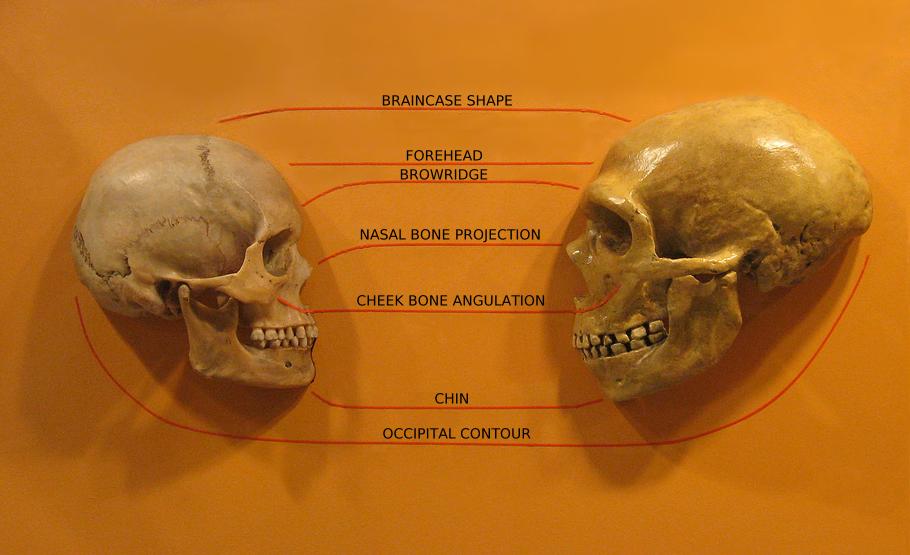
"An international multidisciplinary team recently published a paper which examined Neanderthal and modern human skulls. They were trying to answer “one of the central questions in human evolutionary studies.” That is, whether any supposed human ancestor could speak—including the Neanderthals.
Virtual 3-D models of the ear structures of Homo sapiens and Neanderthals were made using CT scans. They were then tested using auditory software to calculate the hearing abilities up to 5 KHz. This “encompasses most of the frequency range of modern human speech sounds.” Neanderthals’ ability closely mirrored that of modern humans.
15267-skulls
Furthermore, they were able to calculate the ‘occupied bandwidth’ (the frequency range of maximum sensitivity). In humans this allows us to perceive a wide range of acoustic signals, including consonants, crucial for fully developed language. Here too the Neander­thals’ range was similar to those of humans today.
The similar hearing and bandwidth of Neanderthal hearing “really is the key,” said Mercedes Conde-Valverde. This shows that they “possessed a communication system that was as complex and efficient as modern human speech.”
The belief that Neanderthals were somehow more primitive is massively out of date. 
Among other things, they buried their dead, made jewellery, manufactured pitch, built domiciles outside of caves, made clothing from animal skins, and interbred with sapiens-type humans. They were post-Babel descendants of Noah who had the same anatomical design to communicate as any other human." CMI

Monday, July 4, 2022

Creation Moment 7/5/2022 - Yet more proof that Neanderthals were fully human

And God blessed Noah and his sons, and said unto them, Be fruitful, and multiply, and replenish the earth. Genesis 9:1

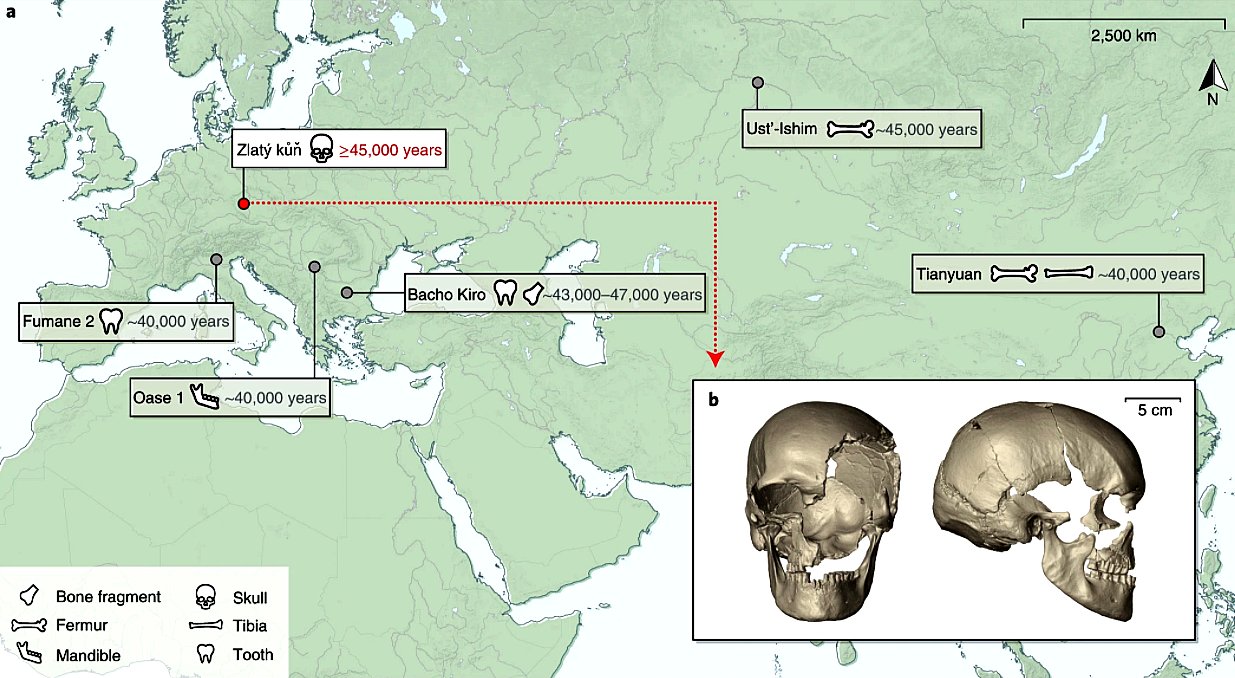
"Modern humans supposedly arrived in Europe around 45 thousand years ago (ka). Evolutionists believe Neanderthals disappeared by about 40 ka, leaving a few thousand years when both modern humans and Neanderthals lived in Europe at the same time. Two recent papers presented genomic analysis of some of the allegedly earliest modern humans in Europe. Hajdinjak et al. presented data from three individuals from Bacho Kiro Cave, Bulgaria (dated to between 45.93 and 42.58 ka), whereas Prüfer et al. analyzed a female skull from Zlatý kůň cave, Czechia (dated to ~45 ka).
15268-map
It was found that the three Bacho Kiro Cave in­di­vidu­als (com­pris­ing a molar and two bone frag­ments) carried 3.0%–3.8% Neanderthal DNA. Hajdinjak et al. said that these individuals were “more closely related to present-day and ancient populations in East Asia and the Americas than to later west Eurasian populations.” The genome of the skull from Czechia carried about 3% Neanderthal DNA, and according to Prüfer et al. “belonged to a population that appears to have contributed genetically neither to later Europeans nor to Asians.” Callaway mentions Viviane Slon, a paleogeneticist at the University of Tel Aviv, as stating that the “research adds to growing evidence that modern humans mixed regularly with Neanderthals and other extinct relatives.”  
Yet more proof that Neanderthals 
 were fully human. 
 
The Czechian skull has been radiocarbon dated several times, yielding approximate dates of 15, 27, 19, and 34 ka. But Callaway says that “on the basis of its Neanderthal ancestry, Krause [co-leader of the study] suspects it is well over 45,000 years old.” The radiocarbon dates, which would not fit the standard evolutionary tale, are conveniently rejected as being artificially young from supposed contamination." CMI

Wednesday, May 25, 2022

Creation Moment 5/26/2022 - Collapse of Scopes Today

He that sitteth in the heavens shall laugh: the Lord shall have them in derision.
Psalm 2:4
 
"The 1925 Scopes Trial reflected the confidence that human evolution was proven beyond a doubt. The evidence was based on skeletal fragments of Piltdown Man, Java Man, and Neanderthals. All three examples have now been disproved.

--Piltdown Man is a forgery made from human and orangutan bones.
  
--Java Man consisted of three teeth (two orangutan and one human), a giant gibbon skullcap, and a human thighbone (found 50 feet away from the partial skullcap). It was controversial from when it was first discovered, and still is today.
 
--Neanderthals are now recognized as fully human, even by the National Geographic Magazine, one of the most aggressive pushers and financial supporters of the evidence for human evolution." 
CEH

Friday, October 1, 2021

Creation Moment 10/1/2021 - Neandertals Head-dress Tells Us.....

And hath made of one blood all nations of men for to dwell on all the face of the earth,... Acts 17:26

"Biblical creationists have long held that the Neandertals were just one more group of humans. They were post-Flood, post-Babel descendants of Adam, expressing the genetic variation possible within the human kind, as people do today. 
Now there is also evidence that suggests that these people hunted
birds for their decorative feathers, such as adorned the head-dresses of some native American tribes. A team headed by a paleontologist from the Gibraltar Museum analyzed the remains of some 1,700 Pleistocene (‘Ice Age’) sites across Eurasia and North Africa. They found that Neandertal remains were strongly associated (and more so than non-Neandertal human remains) with the remains of raptors (eagles, etc.) and corvids (crows and the like).
People today don’t eat these types of birds, and in any case there were never any of the usual signs of butchery for meat on these bird bones; the only cut marks were on the wings, where there is not much meat. This suggests Neandertals hunted them not for food, but for their generally dark, resplendent flight feathers, i.e. for decorative purposes.....it also baffles the evolutionary notion that these were some sort of dull-witted people with only basic survival instincts. As one researcher said: “A purely utilitarian kind of person does not put on a feathered head-dress.” CMI

Friday, July 2, 2021

Creation Moment 7/3/2021 - DRAGON MAN: Darwinian Storytellers & Playwrights at work again

But thou, O LORD, shalt laugh at them; Psalm 59:8

"The tale of Neanderthals, Denisovans and modern humans shakes up evolutionists again with another skull from China....the Dragon Man from China. If everything you know was wrong then,
everything you know is wronger now. As usual, the news media went ape over the news, but they don’t know this time whether to be excited or confused. 
This big skull, found in 1933, donated to a museum in 2018, and announced Saturday after scientists had a chance to look at it. There is no record of where it was found (a key piece of evidence). Is it related to Neanderthals? Is it a Denisovan male? Is it something else? The papers announcing it call it “Homo longi” but some scientists are unhappy about giving it a new name prematurely.

“Dragon Man” May Replace Neanderthal as Our Closest Relative (The Scientist).

The single cranium used to describe the species—the largest of any hominin and remarkably well-preserved for being at least 146,000 years old—has a murky history that some experts say limits what conclusions can be drawn about it, but it does add to anthropologists’ understanding of human evolution in Asia during the latter half of the middle Pleistocene, an important period in human expansion.

Scientists hail stunning ‘Dragon Man’ discovery (BBC News). Pallab Ghosh, the professional Darwin hype specialist at the BBC for all things concerning human evolution, gives the skull positive propaganda, as is his style.

Notes: The skull had a brain size “about the same as average” for modern people. Large brow ridges have advantages for protecting eyes and anchoring chewing muscles. Today’s humans may be deprived of those advantages because of accumulated mutations. But the scientists are not even sure about the provenance or date of the skull.

Homo longi: extinct human species that may replace Neanderthals as our closest relatives found in China (The Conversation). Anthony Sinclair from the University of Liverpool accepts the new species name uncritically. He pushes all the dates as facts, not only for this skull but for its ancestors and their ancestors, up to almost a million years back – all from one skull. Trust me, he says.

While the shape of the family tree presented here is likely to stand the test of time, it is still too early to accept these predicted divergence dates as definitive. That said, the research also sheds important light on how human species occurred and spread through the Middle Pleistocene – into all areas of our planet. Crucially, many of these species may have interbreed.

Mysterious skull fossils expand human family tree — but questions remain (Nature). Nicola Jones joins the parade but allows some room for doubt, saying that the Dragon Man skull has “sparked debate.” Note: only moyboys and evolutionists are allowed in the debate.

Newly identified ancestor of Neanderthals complicates the human story (New Scientist). Michael Marshall thinks Dragon Man is an ancestor of Neanderthals just because the discoverers say so. He admits, however, that the story is now more complicated. Why do they even call these hominins? They’re upright-walking, tool-making, intelligent humans, and now the dates are all scrambled up. Doesn’t Mike know that the species names are all obsolete racist labels for people?

The sediments in which the bones were found are between

140,000 and 120,000 years old. Our species had emerged in Africa by this time, and made some forays outside: Homo sapiens specimens from 210,000 years ago have been found in Greece, and a seemingly more sustained population existed in the Israel region from at least 177,000 years ago. But H. sapiens wasn’t the only hominin: Europe and western Asia were home to the Neanderthals (Homo neanderthalensis), while eastern Asia was home to a related group called the Denisovans.

As expected, all the media reporters who were “in” on the embargo had advance copies of the artwork so that they could appear as insiders with their D-Merit Badges when publishing their versions of the story. The drawings show a muscular male with full beard and long black hair, six-pack abs and big arm guns, holding a stone tool. At least he was probably not competing in women’s sports back in a time when biological sex meant something.

Divination with DNA

The announcement may have scooped a large team from Max Planck Institute that published in Nature an account of the DNA collections in Denisova Cave, Siberia. They think they can reconstruct 300,000 years of occupation of this cave. Do they really think that intelligent upright people who were skilled hunters had nothing else to do for that long? The regurgitators at Medical Xpress do.

When matching the DNA profiles with the ages of the layers, the researchers found that the earliest hominin DNA belonged to Denisovans, indicating that they produced the oldest stone tools at the site between 250,000 and 170,000 years ago. The first Neandertals arrived towards the end of this time period, after which both Denisovans and Neandertals frequented the site—except between 130,000 and 100,000 years ago, when no Denisovan DNA was detected in the sediments. The Denisovans who came back after this time carried a different mitochondrial DNA, suggesting that a different population arrived in the region.

The team had to assume evolution to date the DNA based on the Darwin narrative. The geochronologists collected samples from 700 sites in the cave, and then the evolutionists put them into the standard timeline. Divination experts could tell any story they desire from that kind of mishmash.

This gets so tiring. We already know the play is wrong, because all the previous acts have been overturned. The Darwin Party carries on its busy work incessantly, because they have job security as storytellers and playwrights. Some day one hopes this whole enterprise will be tossed into the trash bin of history as a monumental waste of time. More regrettable, though, is that all these props have been used in Darwin’s theater of the absurd to mislead generations of students. We need to shed light, all right. Take off the roof and let the sunshine in. It will overwhelm the theater’s gimmicks and send the perpetrators running for the darkness that they love." CEH

Saturday, June 27, 2020

Creation Moment 6/28/2020 - Truth about Homo Neanderthalensis

"Myth-busting Neanderthal narrative takes decades. A lengthy piece in the New York Times shows how long it has taken to overcome what CEH calls “historical racism,” the myth that fossil humans were “other” than human.


That’s why we give them other species names, like Homo neanderthalensis.
NY Times reporter Jon Mooallem interviews the work of Clive Finlayson at Gibraltar who shows many reasons why “Neanderthals were people, too.”

He tells how Frenchman Marcellin Boule in 1911 propagated the Neanderthal myth of stoop-shouldered, beetle-browed imbeciles on their way to the cave cookout. “A lot of what he said was wrong,” Mooallem finds from Finlayson. “Still, Boule’s influence was long-lasting. Over the years, his ideologically tainted image of Neanderthals was often refracted through the lens of other ideologies, occasionally racist ones.”
CEH
...And all the people said, Amen... 1 Chronicles 16:36